What is a Surinam toad?
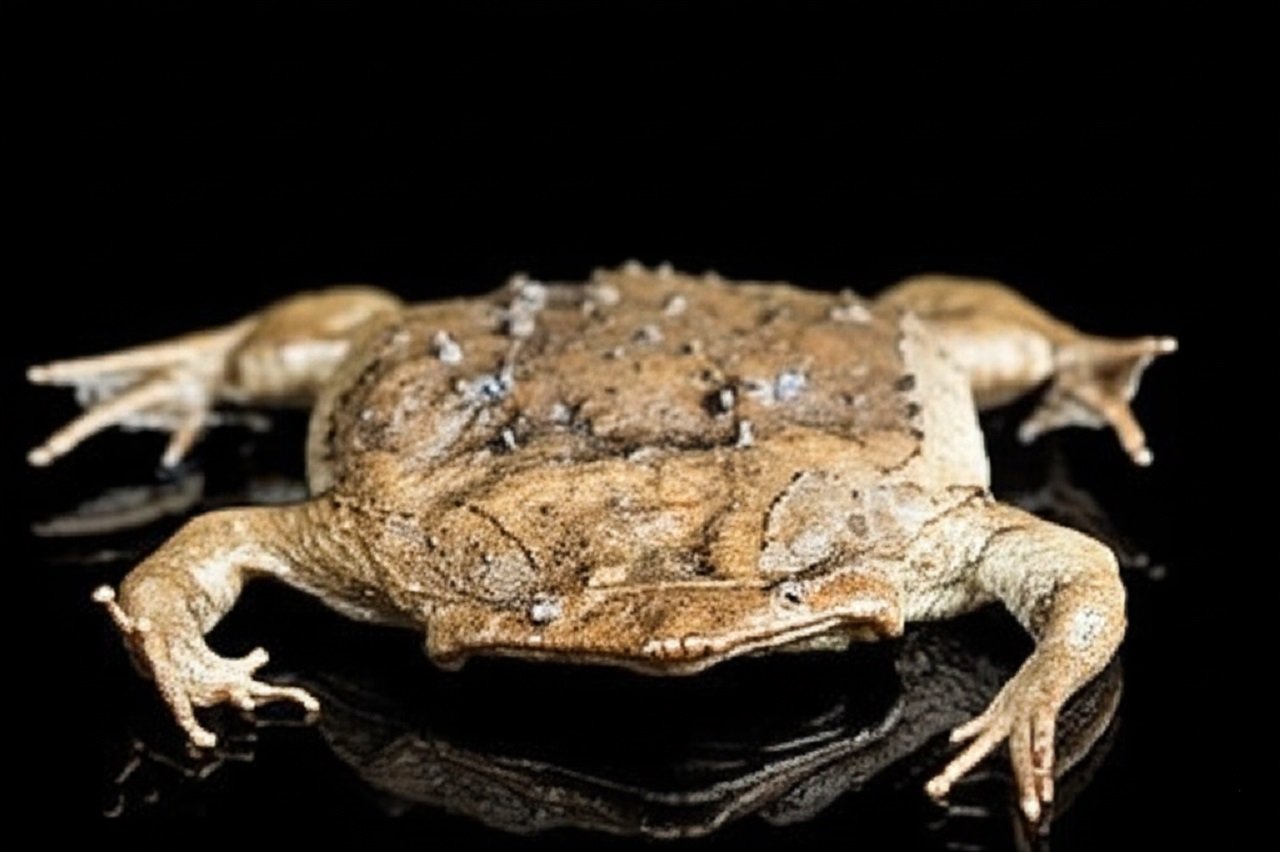
With its flattened, leaf-like body, triangular head, and tiny, lidless eyes perched on top, the Surinam toad (Pipa pipa) has one of the most unusual appearances among amphibians—and an even more bizarre method of reproduction.
Instead of laying eggs in water or on land, the female carries them in small, pocket-like holes on her back, where the young develop and eventually emerge fully formed.
These toads are sometimes called “star-fingered toads” due to the star-shaped sensory extensions on the ends of their long fingers. They’re also nicknamed “stargazers” thanks to their upward-facing, lidless eyes.
Habitat and Feeding
This fully aquatic species thrives in slow-moving freshwater environments like rainforest ponds, swamps, and wet forest floors across the Amazon Basin, including Suriname, its namesake, as well as eastern Trinidad and Tobago.
Their mottled brown or olive coloration allows them to blend into the muddy bottoms of these environments. Staying perfectly still, they ambush prey such as small fish, crustaceans, and aquatic invertebrates.
Surinam toads are nocturnal hunters. Using the sensitive star-like tips of their fingers, they detect nearby prey and either scoop them up with their hands or suck them into their mouths—which lack both teeth and tongues.
Breeding Behavior
Unlike most frogs and toads that vocalize through air sacs, male Surinam toads produce underwater clicks by snapping a throat bone called the hyoid. When a female responds, the male clasps her in a position called amplexus, and the pair performs a slow, aquatic somersault.
During this ritual, the female releases eggs, which the male fertilizes and presses into the skin on her back. Over time, a layer of skin forms over the eggs, creating a series of protective chambers.
Rather than hatching as tadpoles, the young develop completely inside these pockets. After about three to four months, they emerge as tiny, fully formed toads, each about half an inch long.
Though this might seem like a strange process, it gives the young a much higher chance of survival by shielding them from predators during their most vulnerable stage.
Conservation Status
Surinam toads are not currently endangered, but their natural habitats face growing threats from human activities such as deforestation, agriculture, and livestock grazing. Preserving their ecosystems is vital to ensuring this fascinating species continues to thrive in the wild.