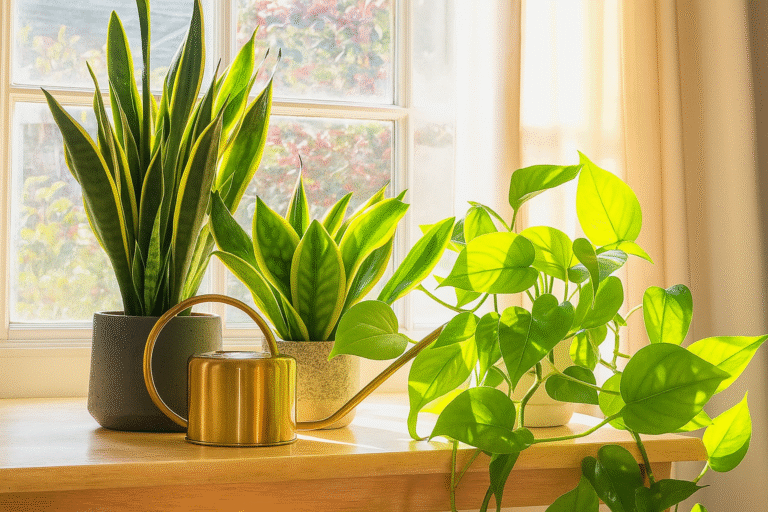
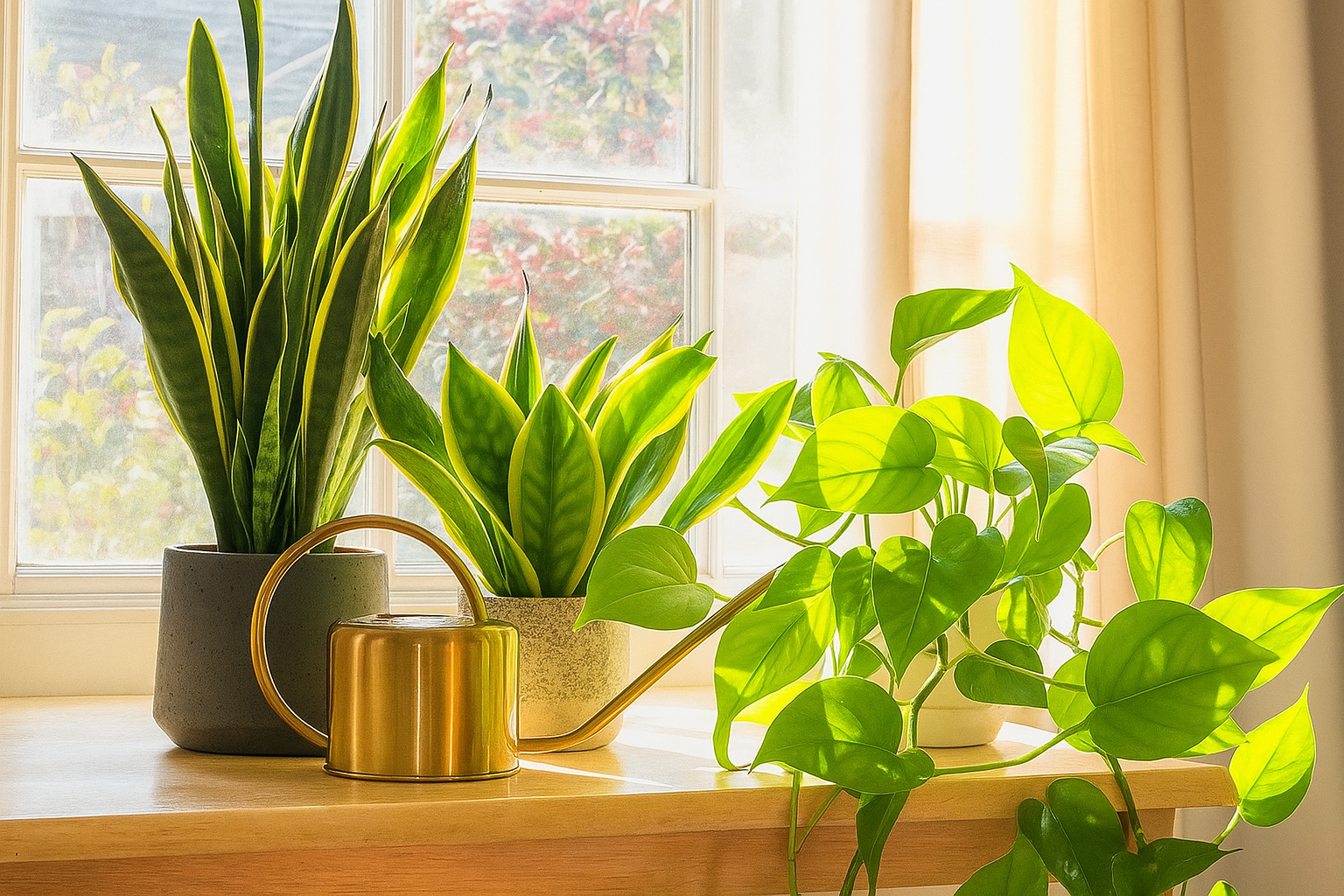
Snake plants (Dracaena trifasciata), with their striking vertical leaves and effortless charm, have earned a top spot among the most loved houseplants around the globe. Known for their toughness, drought resistance, and ability to cleanse the air, they adapt to nearly any indoor space—whether it’s a cozy apartment or a busy office.
They’re famous for being hard to kill, but that doesn’t mean they don’t need care. With a few thoughtful adjustments to your routine—covering watering, lighting, feeding, and pest control—you can help your snake plant grow stronger, greener, and healthier for years.
Below, you’ll find 10 proven tips to give your indoor snake plant the best possible start (and keep it looking stunning).
1. Choose the right pot and soil
Snake plants dislike sitting in water. Select a pot with drainage holes to let excess moisture escape—terracotta pots are excellent because they absorb and release moisture naturally.
Use a quick-draining potting mix. A cactus or succulent blend is ideal, or make your own by mixing:
• 2 parts all-purpose potting soil
• 1 part coarse sand
• 1 part perlite
Avoid moisture-heavy soils that keep roots wet for too long, as these can cause rot.
2. Water less, but wisely
These plants store water in their leaves, meaning they need infrequent watering. Always wait until the top 5–8 cm (2–3 inches) of soil is dry before adding more water.
• Spring/Summer: Water every 2–4 weeks depending on light and humidity.
• Autumn/Winter: Reduce to every 4–6 weeks.
Overwatering signs: Yellow, mushy leaves and a foul smell from the soil.
Underwatering signs: Wrinkled or curled leaves with crisp edges.
3. Give them the right light
Snake plants tolerate low light but truly thrive in bright, indirect light.
Good spots include:
• Near a north- or east-facing window
• Behind a sheer curtain filtering sunlight
• Under artificial grow lights
Too much direct sun can scorch leaves; too little light can slow growth. Rotate the pot every few weeks so all sides get light evenly.
4. Keep conditions comfortable
Ideal temperatures are 16–29°C (60–85°F).
Avoid:
• Cold drafts
• Windowsills in winter
• Heat vents blowing directly on the plant
They’re fine in normal household humidity (30–50%)—no misting required. Keep them above 10°C (50°F) to avoid cold damage.
5. Feed during active growth
From spring through early autumn, fertilise every 4–6 weeks with a balanced liquid houseplant food (10-10-10), diluted to half strength.
Skip feeding in winter when growth naturally slows. Over-fertilising can cause weak, floppy growth or root burn.
6. Keep leaves dust-free
Dust buildup blocks light and reduces the plant’s air-purifying abilities. Wipe leaves gently with a damp, soft cloth. Avoid commercial leaf-shine sprays—they can clog pores.
7. Repot every few years
Snake plants like slightly tight roots but still need fresh soil and space occasionally. Repot when:
• Roots push through drainage holes
• Soil is compacted or drains poorly
• It’s been 2–3 years since the last repot
Choose a pot just a bit larger (2–5 cm / 1–2 inches wider) and refresh with new, fast-draining soil.
8. Prevent pests and disease
Common pests include mealybugs, spider mites, and fungus gnats. Remove them with neem oil, insecticidal soap, or a cotton swab dipped in rubbing alcohol.
Watch for root rot from overwatering and fungal leaf spots from poor airflow. Keep soil well-drained and maintain good ventilation to avoid these issues.
9. Multiply your plants
Snake plants are easy to propagate:
• Division: Separate clumps during repotting and plant them in new pots.
• Leaf cuttings in water: Place a cut leaf base in a glass of water until roots develop.
• Leaf cuttings in soil: Plant cut segments in moist, well-draining mix.
It’s a simple way to grow more plants for yourself or share with friends.
10. Style them to suit your space
Snake plants fit any décor style.
Try:
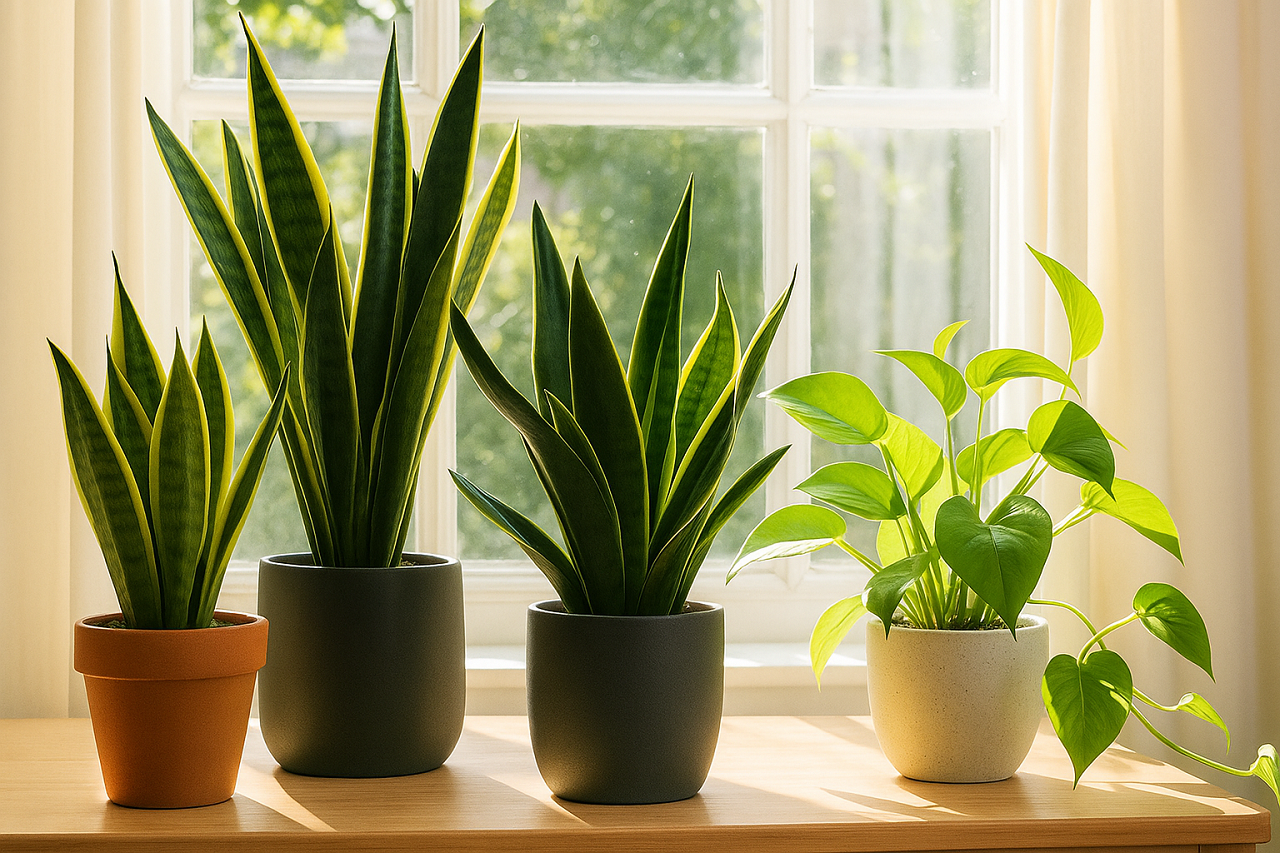
• Sleek pots for a modern look
• Pairing with trailing plants for contrast
• Tall varieties like Laurentii to fill empty corners
• Compact types like Hahnii for desks or shelves
Final thought:
A healthy snake plant isn’t just easy on the eyes—it also improves air quality and brings a calming touch to any room. With these tips, you can enjoy years of vibrant, low-maintenance greenery.